

Air Sealing and R-Value
Insulation Installation for Quieter, Cheaper-to-Heat Buildings
Valcast Construction USA Inc. installs spray foam, fiberglass batt, mineral wool and blown-in insulation across Noblesville and Hamilton County, in new construction, additions, attics and finished basements. Call or text (463) 777-2799 or request an estimate and we will walk the building, tell you where the heat is actually going, and put the assembly and R-values in writing.
- Specialized trades under one contract
- Residential & commercial
- Rated assemblies done right
- Free written estimates
Indiana Sits in Climate Zone 5
Hamilton County falls in climate zone 5, which drives the numbers the code official is going to look for. In practical terms that means R-49 or better in the attic, cavity insulation in the R-13 to R-21 range for above-grade walls depending on framing depth and whether continuous exterior insulation is present, R-15 to R-19 in basement and crawlspace walls, and rim joists treated as their own detail.
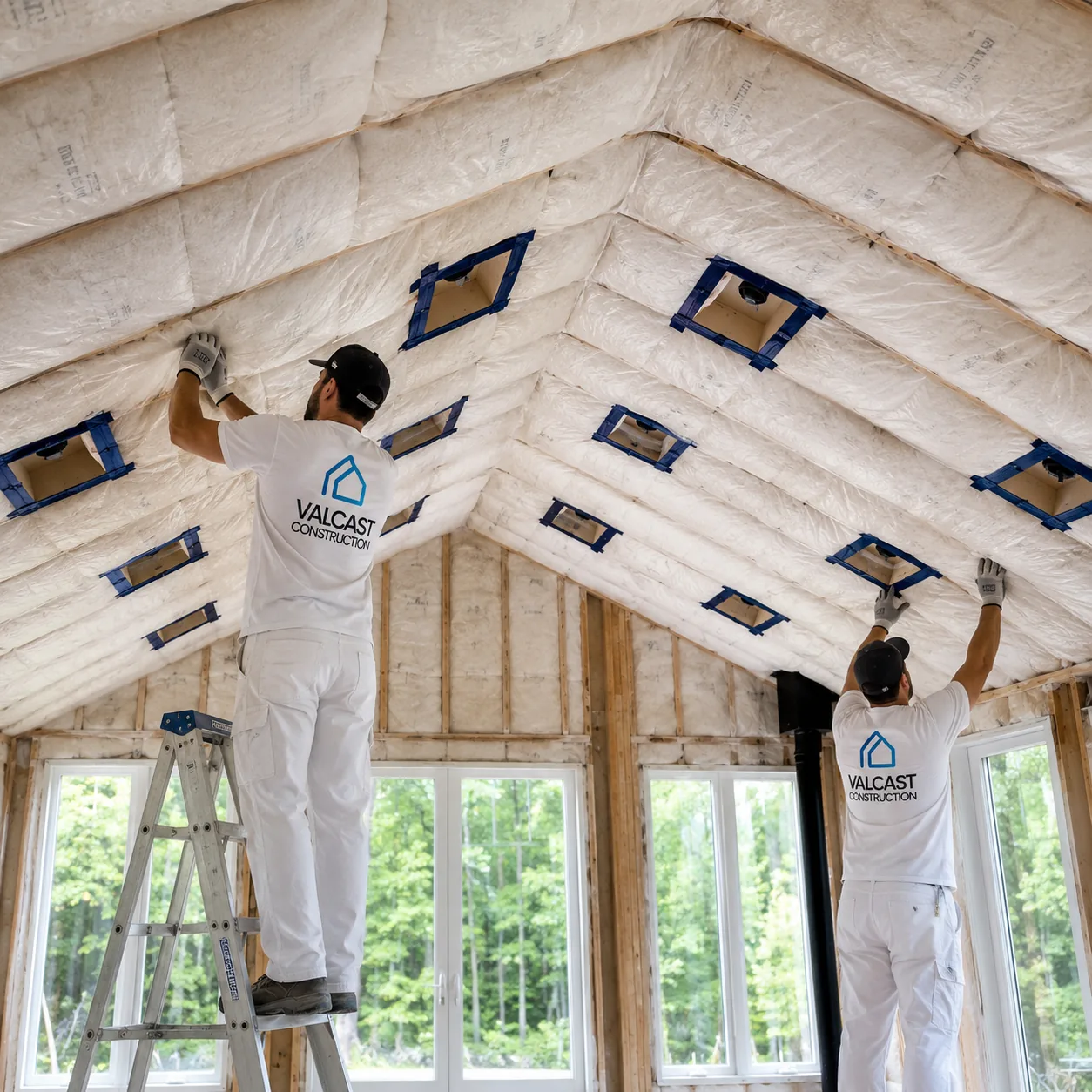
Numbers on a bag are not the same as performance in a wall. A batt that is compressed around wiring, cut short at the top plate or left with a gap behind an outlet box loses a real share of its rated value. We cut batts to fit around obstructions instead of stuffing them, split around wires, and fill the narrow bays at corners and headers.
Insulation also only performs when the air is stopped. We seal top plates, penetrations, band joists and the gap between framing and masonry before insulating, because a cavity with air moving through it is a cavity that is barely insulated.
Materials We Install and Where They Belong
There is no single best insulation. There is a right one for the assembly, the budget and the exposure, and part of our job is telling you which is which instead of selling the most expensive option in every bay.
Closed cell spray foam
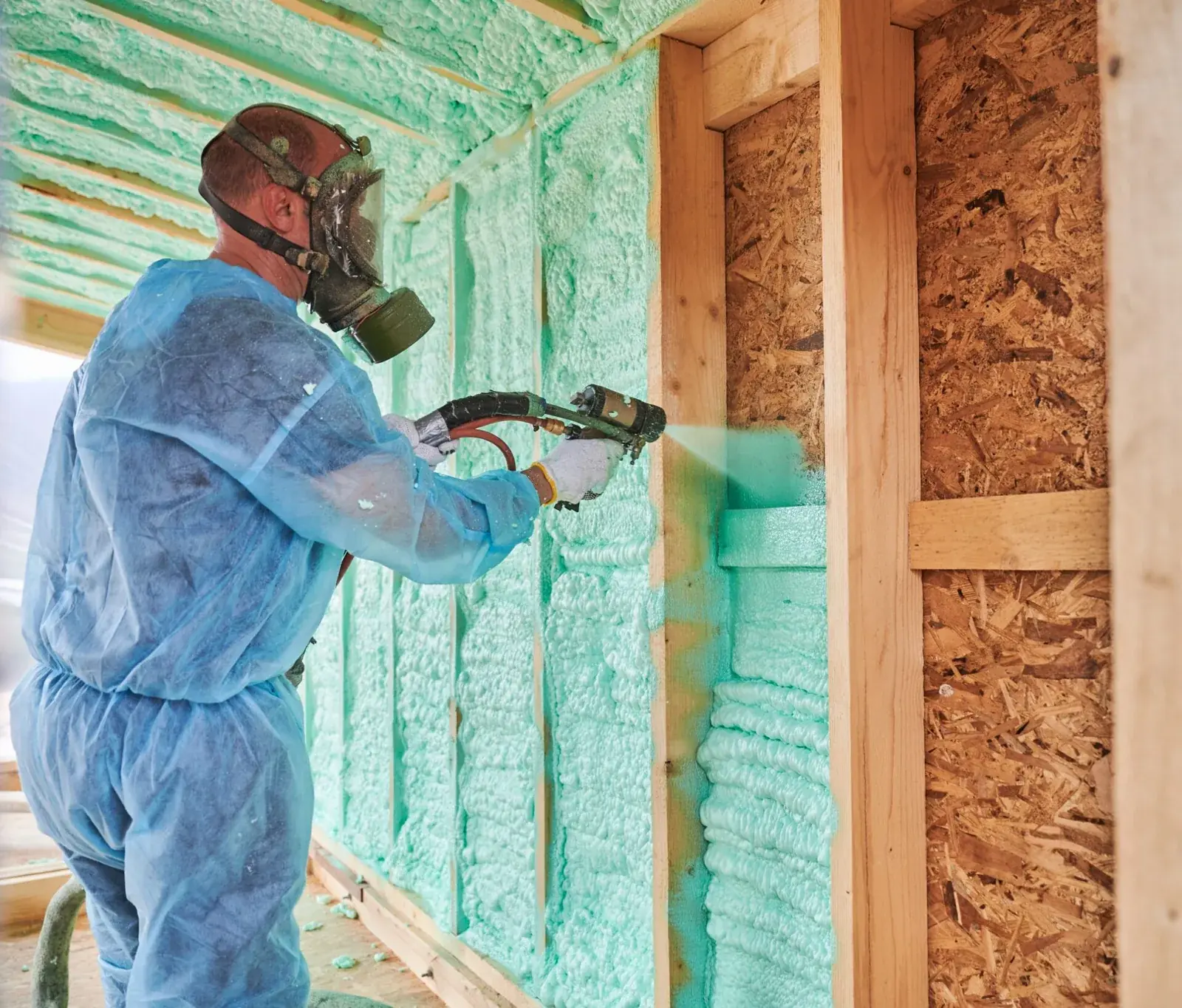
About R-6 to R-7 per inch, a vapor retarder at sufficient thickness, and structural stiffness. Our first choice for rim joists, crawlspaces, cathedral ceilings and cantilevered floors.
Open cell spray foam
Around R-3.5 to R-4 per inch, expands hard into irregular framing, and seals air well. Good for interior walls, roof decks in unvented attic designs and sound control on plumbing walls.
Fiberglass batt
Cost effective and predictable in standard 16 and 24 inch bays. Installed to a grade 1 fit with no compression, gaps or voids behind the drywall.
Mineral wool
Dense, water repellent, and non-combustible. Used where fire performance or acoustics matter, including rated assemblies and party walls.
Blown-in cellulose and fiberglass
Attic depth built to the R-value target with baffles at the eaves and depth markers left in place so anyone can verify the install later.
Attics, Rim Joists and Basements
Attics give you the fastest return in an older Noblesville house. We air seal the ceiling plane first, seal the top of every interior partition, box out recessed lights that are not rated for contact, then blow to depth with baffles keeping the soffit vents open.
Rim joists are the single most overlooked area in central Indiana homes. That band around the perimeter of the floor system is thin, leaky and directly exposed to outside air. Two to three inches of closed cell foam there fixes a cold first floor better than anything else you can do for the money.
Basement walls need insulation that tolerates moisture. Foam applied directly to the foundation, followed by metal stud framing or wood framing held off the wall, keeps the dew point out of the cavity. That is the sequence we use on basement finishing jobs so the finished space stays dry.
The Valcast Difference
Why Contractors and Homeowners Call Us Back
Specialized Trades, One Contract
Experienced crews specializing in insulation, framing, drywall, taping, and painting are coordinated and managed by Valcast under one contract and one point of contact. This keeps scheduling, communication, and quality control consistent throughout our scope.
Commercial Standards on Every Job
The same tolerances, fastening schedules and finish levels we hold on commercial build-outs get used on basements and custom homes too.
Built to Pass Inspection
Rated assemblies are built to the listed design and firestopped properly, and we keep the documentation inspectors ask for.
Clean, Contained Work Areas
Dust control, floor protection and daily cleanup are part of the job, not an add-on you have to ask for.
Schedules We Actually Hold
Crews are sized to the job so taping starts when the board is done and your other trades are not left waiting.
Straight Answers on Pricing
Written scopes spell out board type, finish level and what is excluded, so the number you approve is the number you pay.
Good Questions
Frequently Asked Questions
Insulate It Once, Correctly
Valcast Construction USA Inc. installs insulation for builders, remodelers and homeowners in Noblesville, Westfield, Cicero, Carmel and the north side of Indianapolis, on everything from a single rim joist to a full custom home.
Call or text Valcast Construction USA Inc. at (463) 777-2799 or request an estimate and we will measure the assemblies and give you real numbers.